About us
Turtle Crest Farm is our wild act of love for the world. In our time of stewarding this land since 2019, we have heard the plants and animals around us saying through their quiet, everyday actions, "We will take care of you." We attempt to live each day as a thank you for that gift of life, living each act as an act of reciprocity, caring for the world that cares for us.
Our Practices
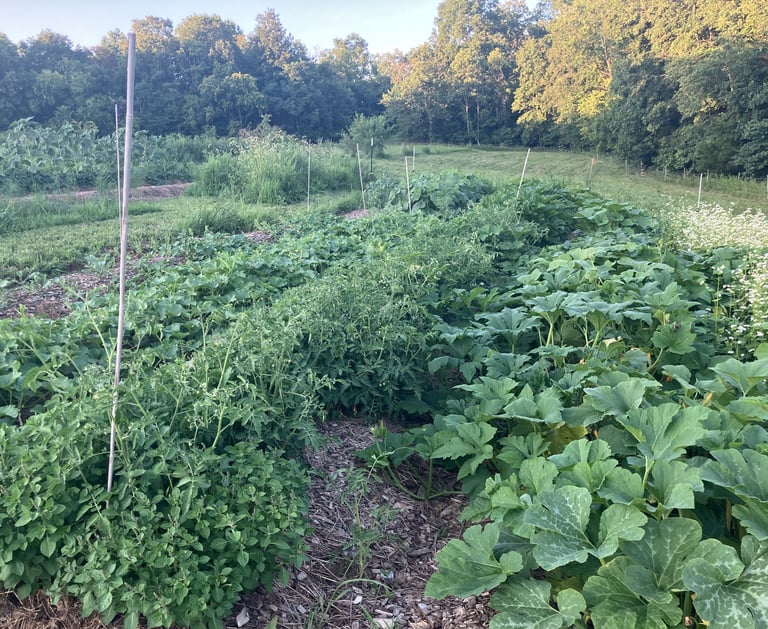
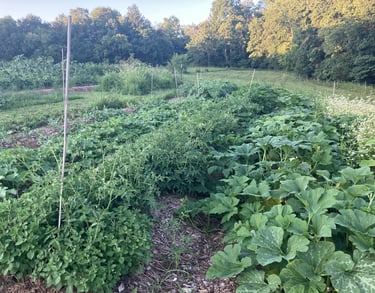
We believe deeply that everything is tied to one another. Therefore, to create nutritious food and healthy plants, we focus on creating mutually supporting systems on the farm. Every action made at Turtle Crest Farm is in an intentional attempt to build a more robust and resilient ecosystem.
We create our garden beds first by loosening the soil manually with a broadfork. This allows us to eliminate any compacted soil from years of tobacco farming decades ago while maintaining the soil structure, organic matter, and life that is critical to allowing the soil to hold both air and water. Beds are then covered with a thick layer of woody compost or mulch and planted immediately. Once the beds are built, we strive to eliminate soil disturbance for the life of the bed.
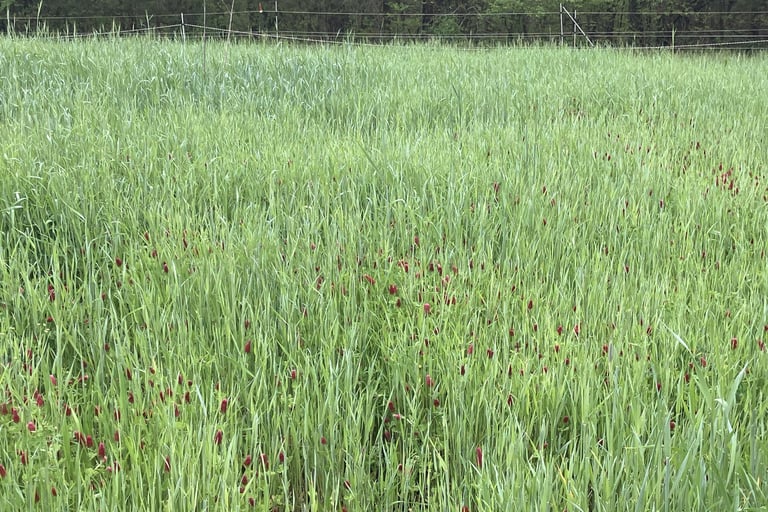
To continue to build soil health we rely extensively on cover crops and compost. Cover crops are chosen to add fertility as well as structure to the soil. We terminate cover crops either through crimping in the spring or by relying on the freezing temperatures of winter. The residue left by the cover crops then serves as a mulch for the next growing season, eliminating the need for herbicides.
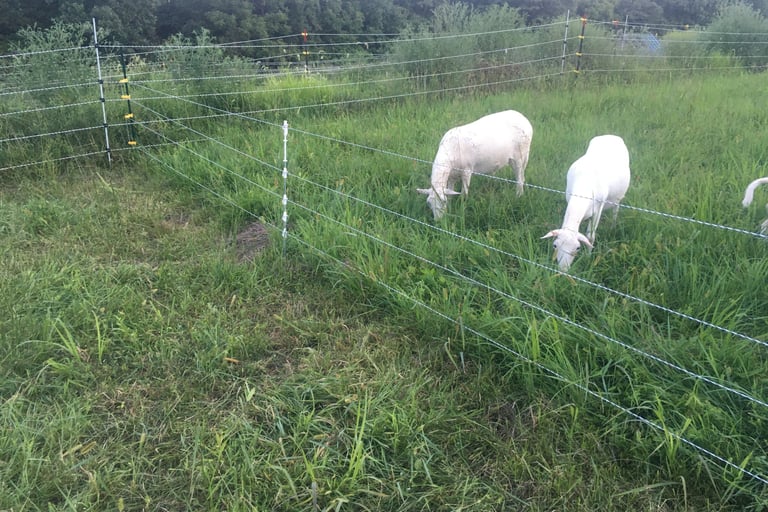
Fertility is further cycled on the farm through our pasture-raised sheep and chickens. The animals are moved to fresh pasture every two days, and animals do not return to the same paddock for nearly three to four months depending on the season. The sheep are grass-fed only, and the chickens are fed a custom mix of fermented whole grains supplemented with black soldier fly larvae. Black soldier fly larvae eliminate a considerable amount of food waste from landfills and eliminate the need for fish meal in our chicken feed. This form of rotational grazing improves the health of our pastures dramatically and increases the fertility of the pastures.
We will then mow the pasture to harvest the increased fertility generated in the rotational grazing system. The mowed grass is combined with broken down wood chips from a local sawmill and composted in a thermophilic process. This compost is then added to the gardens at planting time and throughout the growing cycle, leading to healthy plants that are more resistant to pest pressure. Additionally, the intensive use of intercropping provides spaces and habitat for beneficial insects, eliminating the need to apply pesticides on the farm.
Lastly, through much frustration at the presence of plastics in farming supplies and purchased compost, we are trying to eliminate single use plastics on the farm. Our perennial plants are started in air-pruning beds for the first year, allowing for robust and bushy root systems without girdling roots in plastic pots. These plants are then dug up before winter and stored outside in moist sawdust until spring. Plants can then be shipped and sold as bare root plants, or they can be potted up into our custom cardboard pots to be sold directly in the spring. Our annual plants are started in soil blocks before being potted up into our custom cardboard boxes. We are excited about the possibilities of this systems and its potential impact to eliminate plastic pollution!